SuperMemo method
How does the SuperMemo method work?
The SuperMemo method is based on intelligent repetitions, which means reviewing material at individually calculated intervals. Instead of returning to every piece of information equally often, you review it exactly when it needs reinforcement.
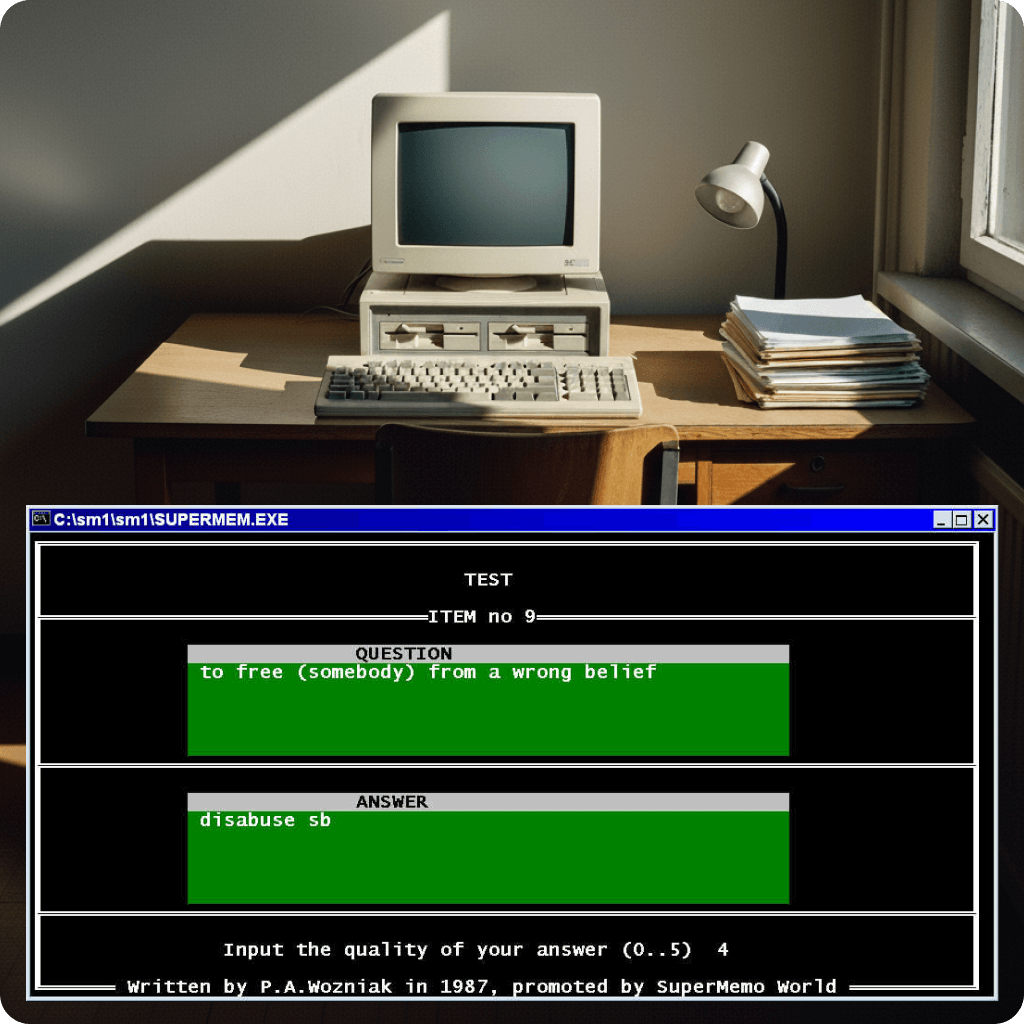
On each exercise card in the course, you assess how well you remember the information by choosing “I know”, “Almost” or “I don’t know”. The algorithm analyses your results and uses them to schedule the next repetition.
How does SuperMemo know when a particular piece of information should be repeated?
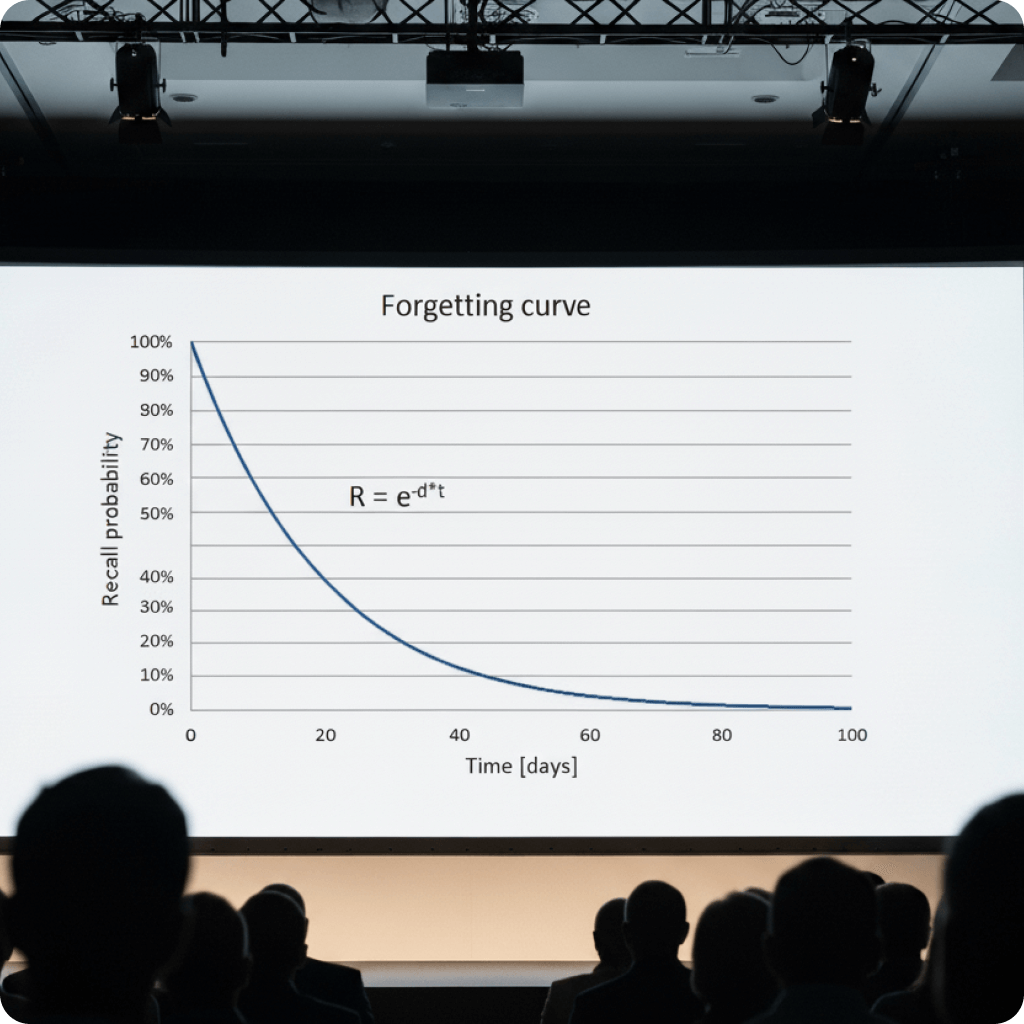
The algorithm analyses your learning history, the results of consecutive repetitions and the way you remember individual pieces of information. Based on this data, it predicts the probability that you will still remember the material and selects the appropriate time for the next repetition.
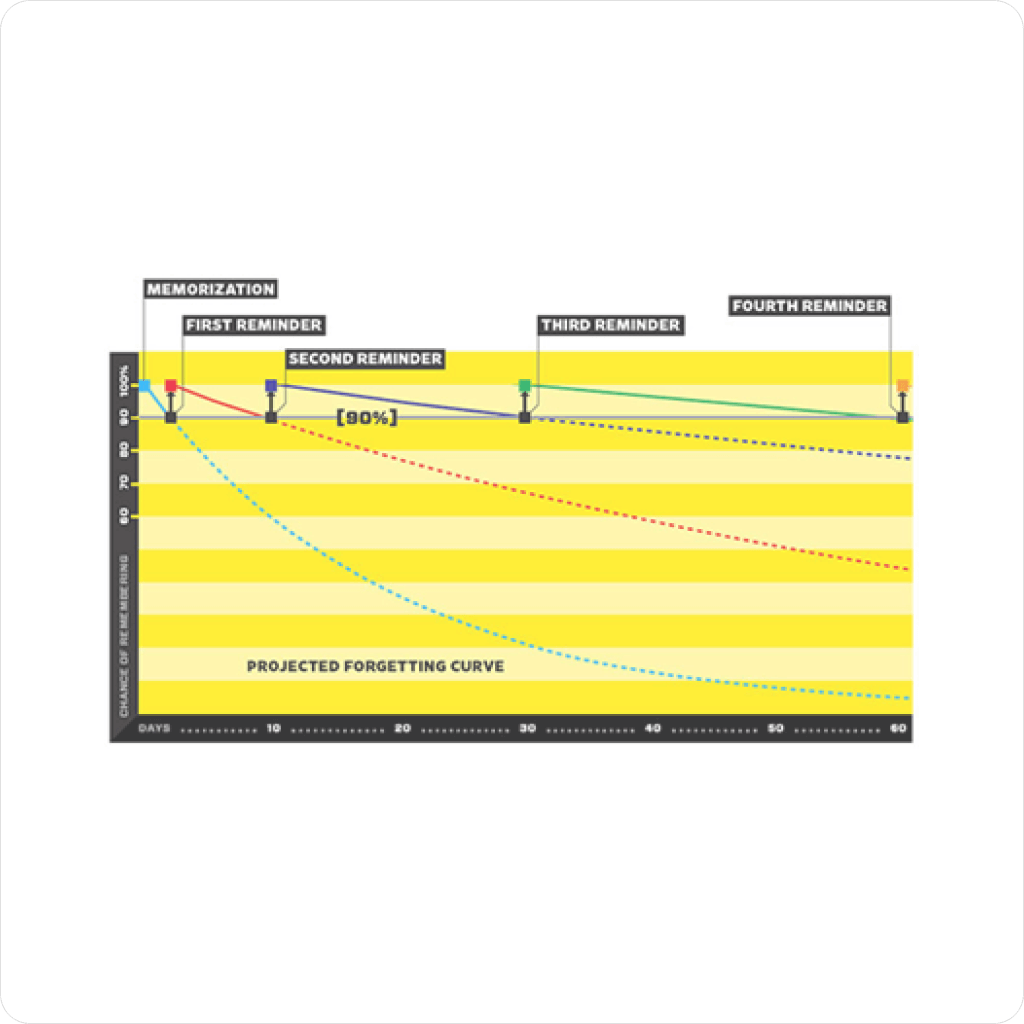
The aim is to schedule the repetition for the latest possible point in time, before the risk of forgetting becomes too high. As a result, information you remember well appears less and less frequently, allowing you to devote more time to material that genuinely requires further work.
Why can the SuperMemo method reduce the time needed for learning?
The effectiveness of an intelligent repetition algorithm depends primarily on how accurately it can predict the probability that a particular user still remembers a specific piece of information. The more accurate these predictions are, the better the timing of subsequent repetitions can be adapted to the user’s individual memory processes.
In practice, the quality of the algorithm affects both the amount of time spent learning and knowledge retention, meaning how much information remains in memory. Precise repetition scheduling can save even hundreds of hours of learning per year while maintaining a higher level of retention.
How is this possible? Firstly, the algorithm does not schedule repetitions of well-remembered information too early. Postponing these repetitions helps eliminate unnecessary work. Secondly, when a user still remembers a piece of information after a longer interval, repeating it at that later point can reinforce it more effectively and increase the stability of the memory trace.
In this way, SuperMemo helps reduce unnecessary repetitions and make better use of the time devoted to learning.
Is the SuperMemo method scientifically grounded?
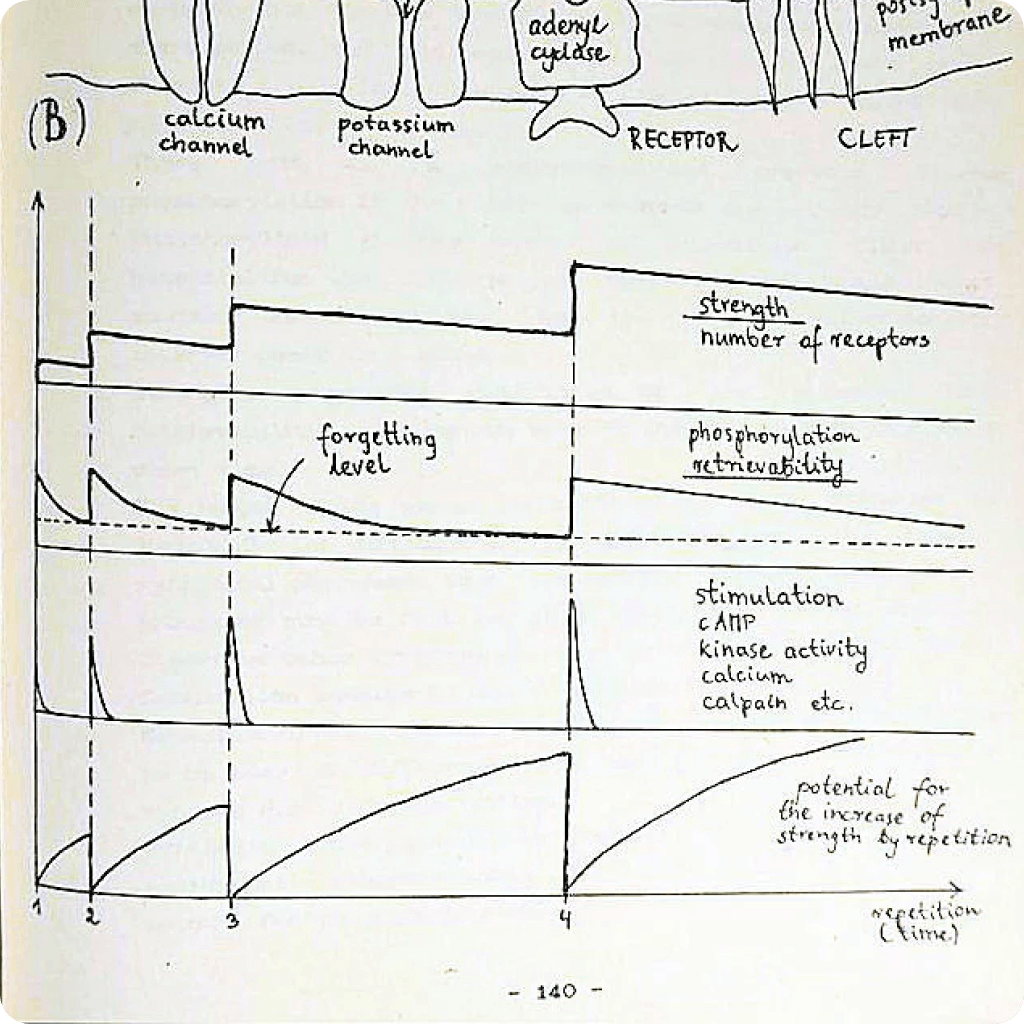
Yes. The SuperMemo method was developed in the 1980s as a result of Piotr Woźniak’s experiments on memory, forgetting and optimal intervals between repetitions. SuperMemo pioneered the development of spaced repetition algorithms and has remained a leader in this field for many years.
Research into the method and its memory models continued over the following decades, and the results provided the basis for scientific publications and academic research. Successive generations of the algorithm were developed using new memory models, data analysis and observations of users’ real-life learning processes.
What is SM-20, and how does it differ from the SM-2 algorithm?
SM-2 is one of the earliest versions of the SuperMemo algorithm. It was developed in the 1980s and later made publicly available. Because of its simplicity and accessibility, it became an inspiration for many applications using spaced repetition.
However, SuperMemo did not stop developing its technology with SM-2. By the time this algorithm was published, we were already using much more advanced and effective algorithms, and new generations of them were developed over the following decades. SM-20 is the latest version of the SuperMemo algorithm.
Why does the quality of a spaced repetition scheduling algorithm matter? How can it be measured?
The quality of a repetition scheduling algorithm is reflected in how well it can predict the probability that a given user will remember a given piece of information at a specific point in time. This prediction is used to schedule subsequent repetitions, for example when the probability of recall falls to 90%. Therefore, an algorithm that performs poorly at such prediction is of low quality, and the more accurate the prediction, the higher the quality of the algorithm. When learning with a high-quality algorithm, you can be confident that you are using your learning time efficiently, i.e. not wasting it on unnecessary or overdue repetitions. You can also be confident about the learning outcomes—whether you are achieving the target level of recall, and thus the retention of the knowledge you are learning.
Is the SuperMemo method used exclusively for language learning?
No. The method can support the learning of many types of knowledge that can be presented as questions, answers, concepts or other items intended for memorisation. In addition to using ready-made language courses, SuperMemo users can also create their own courses and learning materials.
The SM-20 algorithm is also available to companies and developers through the SuperMemo API. This means that SuperMemo’s intelligent repetitions can be used in educational applications, vocabulary and flashcard tools, exam-preparation systems, corporate training programmes and AI-powered solutions.