Extreme courses for vocabulary learning with one-year access – now 30% off with code EXTREME08

Metoda SuperMemo - szybko i skutecznie

SuperMemo method

Quickly and effectively

Metoda SuperMemo - ocenianie odpowiedzi

How does it work?

Start your SuperMemo course with the “Learn” section and discover new words and rules.

After each card, rate how well you remember it by clicking “Know”, “Almost”, or “Don’t know”.

Based on this, the SuperMemo algorithm schedules the perfect moments for review – exactly when the knowledge is about to fade. This way, you learn faster, more effectively, and for the long term.

Metoda SuperMemo - powtarzanie

Tip

The better you remember given information, the longer intervals the algorithm sets between each repetition, and your knowledge is gradually consolidated in long-term memory.

Remember that spaced repetitions are the basis of permanent and fast memorisation using the SuperMemo method. Your learning progress depends on them. If you have a bad day, when you lack the strength and will, skip learning new cards and focus on the REPEAT section instead. Doing even a few repetitions will be a step forward!

Check our courses or create your own.

Metoda SuperMemo - początek

The beginning of the SuperMemo method

The SuperMemo method, which is the basis of all our courses, was created in the ‘80s by Piotr Woźniak — a young, talented scientist and student of molecular biology who needed an effective way to learn biochemistry and … English vocabulary.

In 1991, we became the first company in the world to start using spaced repetition to aid learners and provide them with a better memorisation process. Today, our solution is still an inspiration for almost the entire education industry.

For more check: “The true history of spaced repetition”, written by Piotr Woźniak himself, and „Who invented spaced repetition? The history of the SuperMemo method”, written by Krzysztof Biedalak.

SuperMemo - forgetting curve

Forgetting curve

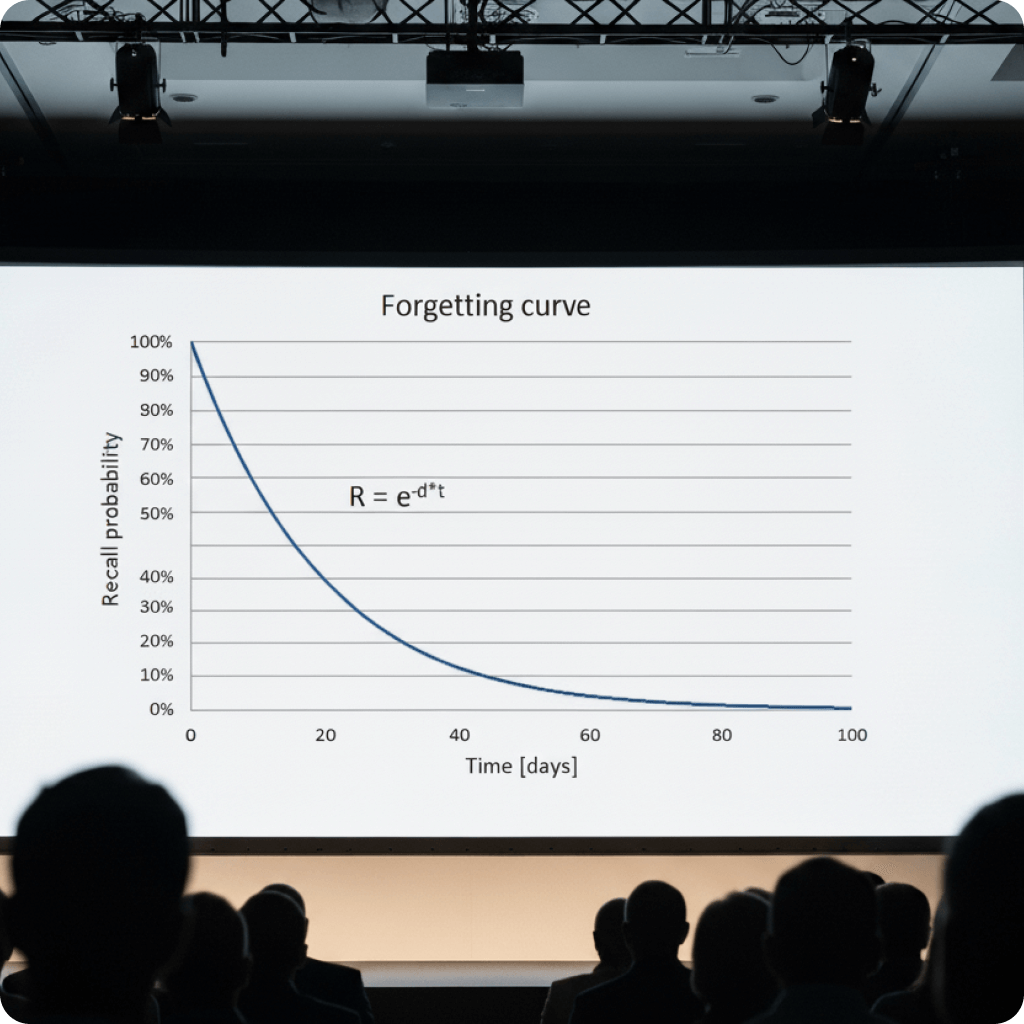
Let’s be honest — we all forget, and the information that we don’t use daily or regularly goes under the knife in the first place. The forgetting curve is a chart where you can observe how the chances of remembering previously memorised information decrease over time.

The knowledge that we can use without problem immediately after learning quickly disappears from our memory, until finally the ability to recall it drops to almost zero. Most of us will recognise this phenomenon from … studying for exams (who among us didn’t try to memorise 6 months of lectures in just one night?).

We recommend “The forgetting curve and repetition – why forgetting is an important part of learning”, CEO, Krzysztof Biedalak. Forgetting curve. Source: SuperMemo research.

SuperMemo - podstawa to powtarzanie

Good news

The ability to recall given information will be dropping mercilessly and quickly … until the next repetition. After that, all the fun with the forgetting curve begins anew, but this time it will take you longer to forget the information again.

Of course, there isn’t a single, universal shape of the forgetting curve — it depends on the individual predispositions of each learner, the amount of study material, and even the time of day. It is also worth mentioning that how effectively we remember given information depends strongly on how well it fits into our inner network of associations and connections — that is, the information already present in our brain. The better the fit, the easier it is to learn. This is why it is usually quite difficult when you start learning a new language. However, it is worth getting through a tougher beginning, because later the whole learning process becomes easier and much more pleasant.

SuperMemo - spaced repetition - Wired

Spaced repetition

Understanding spaced repetition — how does it work?

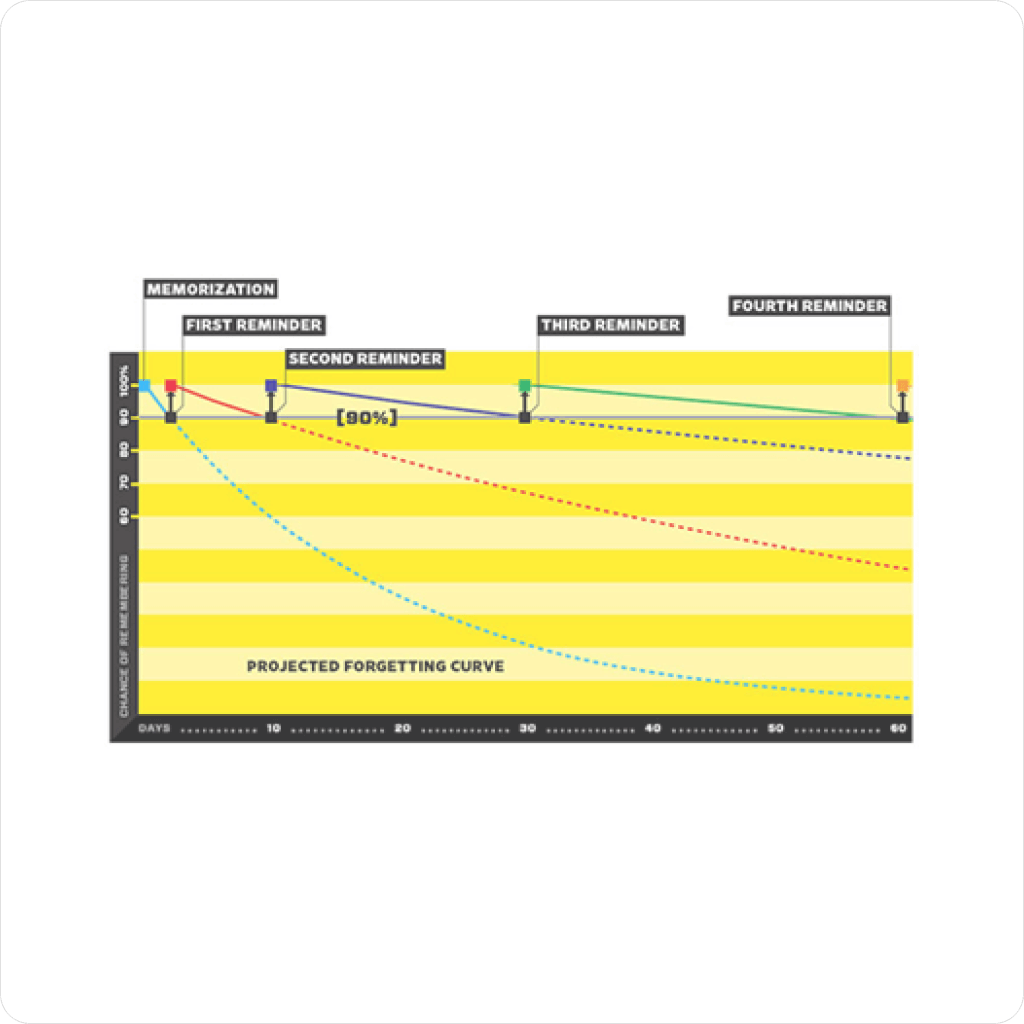
The idea of spaced repetition is to set repetitions at specific intervals, which allows us to minimise their number, and thus learn faster. What do these intervals depend on? First, on our individual pace of remembering and learning — every person has their own predispositions. However, there are several rules regarding long-term memory, thanks to which the SuperMemo method turns out to be really effective. How do they impact spaced repetition? Let’s look at the chart beside:
How SuperMemo works. Source: Wired

On the chart, first you can see the forgetting curve from the previous section — the first time you remember a piece of information, it flies from your memory quite quickly, and within a short time after you finish learning. But with each repetition, the chance of remembering information over time increases, so the intervals between the reminders become longer.However, we should remember that if we forget a given piece of information completely, we have to start the entire repetition process from scratch. That is why it’s so important to start with short intervals and gradually increase them. Finally, let’s quote one of the rules regarding long-term memory:

The later you do another effective repetition, the more its stability will increase.

This means that the later the date of repetition is set, the better the material will be memorised. But there’s a catch — you must not completely forget what you’re learning before then. That is why the basis of spaced repetition and the SuperMemo method is to set repetitions at a later moment, but one in which the information is still highly likely to be remembered (approx. 90%). The SuperMemo algorithm looks for such moments in our application by analysing your pace of remembering and learning progress.

Interested in spaced repetition? Check out the article “Spaced repetition in learning — how does it work?” written by our CEO.

SuperMemo - mity na temat Ebbinghausa

Myths about Ebbinghaus and his forgetting curve

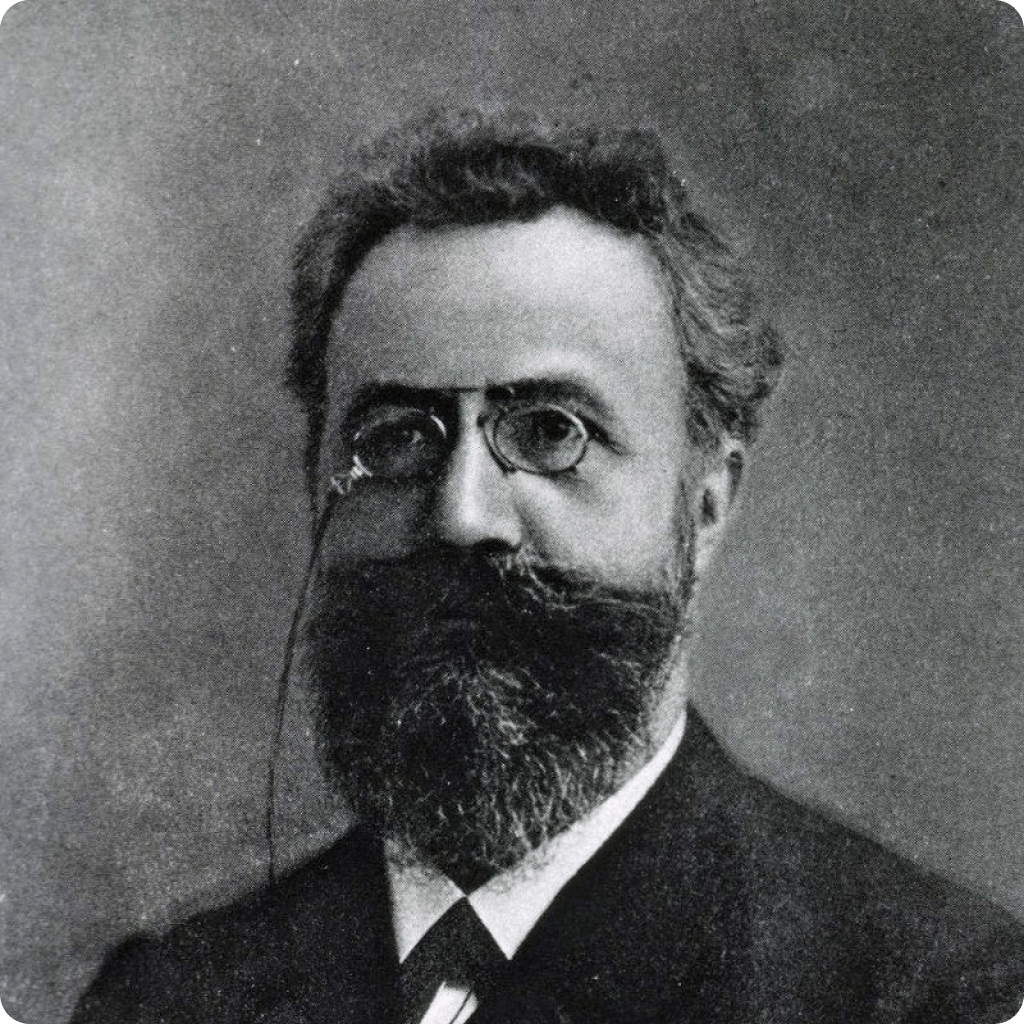
When it comes to repetitions and remembering, one person usually pops up in the discussion — Hermann Ebbinghaus, a German psychologist born in 1850, one of the most famous authors of one of the first pieces of research on memory. But the internet is full of conflicting claims and misinformation, and that’s why it’s important to remember that Ebbinghaus didn’t invent spaced repetition. However, he was the first to analyse a very important subject — the relationship between the level of remembering and the passage of time (for a very specific type of information, which you will learn about in a moment).

What did the German psychologist’s research look like?

The psychologist’s research consisted of memorizing a series of artificial syllables, e.g. KAZ, LEZ, GEC, which did not evoke any associations or emotions. That made them something completely new and more difficult to memorise for the learner. Ebbinghaus measured mainly the time and the number of repetitions needed to remember each series of syllables over time. He then compared the time needed to remember a completely new series of syllables with the time needed to re-learn a series that had already been forgotten. The data presented in his research was used to create the first-ever forgetting curve.

Ebbinghaus’s data, however, was somewhat “out-of-touch”, partly because the memorised information was completely artificial and not useful in everyday life, and, as already mentioned, lacked any logical and emotional connections. And we all know that even if we are just starting to learn, say, a language, in the process we acquire more and more information which, over time, we are able to put into a certain network of connections. We also often use mnemonics. Moreover, the German scientist used only one type of data, arranged in series of the same length. We simply don’t know how his research would work with any other type of information — e.g. English words. Meanwhile, the basis of spaced repetition is the ability to adjust it individually to the learner and type of information. Finally, it is worth mentioning that Ebbinghaus himself did not present his forgetting curve — it was recreated on the basis of the results and numerical data from the experiment. However, this curve has little to do with the charts presented in the press and on the Internet. Those are the achievements of Dr. Piotr Woźniak, the official creator of the SuperMemo method.

SuperMemo - SM-2

The breakthrough came in the 1980s

Hermann Ebbinghaus’s research was “shelved” over the next hundred years, and not considered a scientific breakthrough at all. Only a few scientists and practitioners took on further experiments with memory and repetitions. The real breakthrough came in the 1980s, when a young molecular biology student, Piotr Woźniak, decided not only to discover the correct pattern of remembering, but also to use a computer to predict the optimal time for subsequent revisions for him.

Find more about Ebbinghaus’s research in the article: ”Did Ebbinghaus invent spaced repetition?” and the article “Ebbinghaus and the forgetting curve — a few facts about the experiments and research of the German psychologist”,, written by our CEO.

SuperMemo - spaced repetition - story time

Who developed spaced repetition? Story time!

Let’s move to the year 1982. Piotr Woźniak, an ambitious student of Adam Mickiewicz University in Poznań, was feeling more and more overwhelmed and frustrated by the amount of study material. What bothered him even more was that everything slipped out of his mind right after each exam.

SuperMemo - Piotr Woźniak - krzywa zapominania

The persistence of remembering

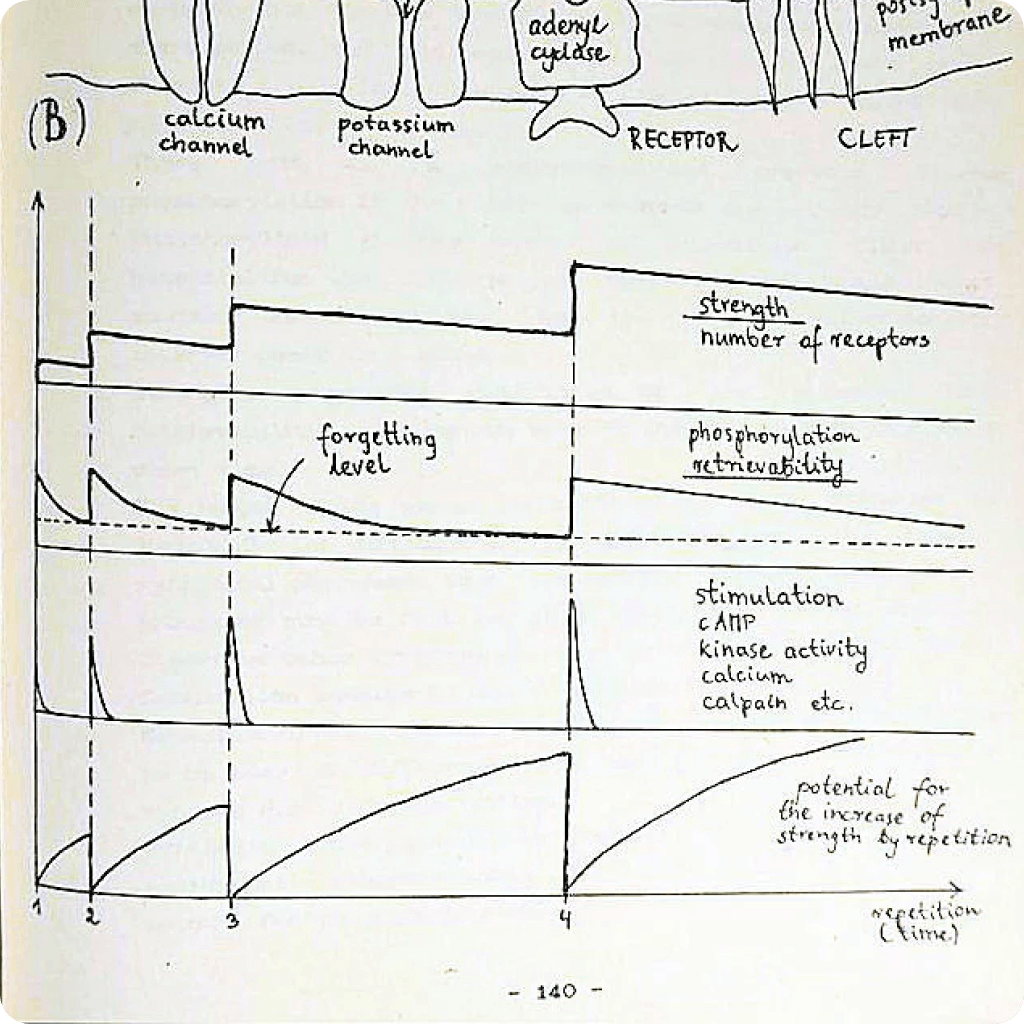
He decided to change it, starting by taking notes on biochemistry and English. He wrote down all the necessary information on cards, in the form of questions and answers. He studied them at irregular intervals, each time noting the date of repetition and any information he failed to remember. In this way, he developed his first principles of effective knowledge formulation.

After some time, he noticed that each repetition had its own “life cycle” (a specific amount of time for which the repeated information is retained in memory) and an impact on the persistence of remembering. On the basis of loose data from his research, the young student created the first version of his original forgetting curve.

SuperMemo - notatki Piotra Woźniaka

The very first version of the SuperMemo method

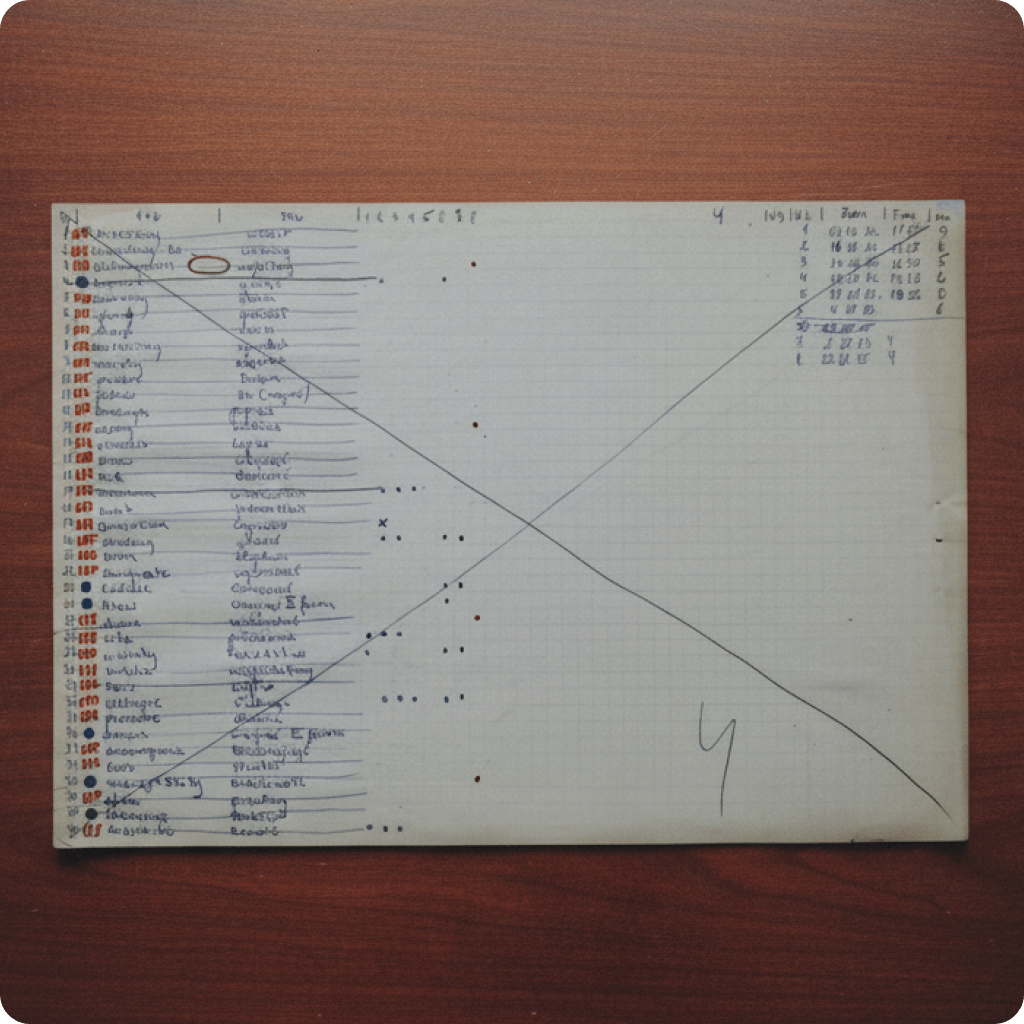
In 1985, Piotr Woźniak decided to go one step further and began a series of experiments, using English vocabulary. This time, he focused mainly on catching and measuring errors during a series of repetitions, separated by intervals of different lengths. Thanks to this, he discovered that after each repetition the interval becomes longer without the risk of forgetting the word. And that’s how the very first version of the SuperMemo method was created — on paper.

Aplikacja SuperMemo 1.0

SuperMemo application 1.0

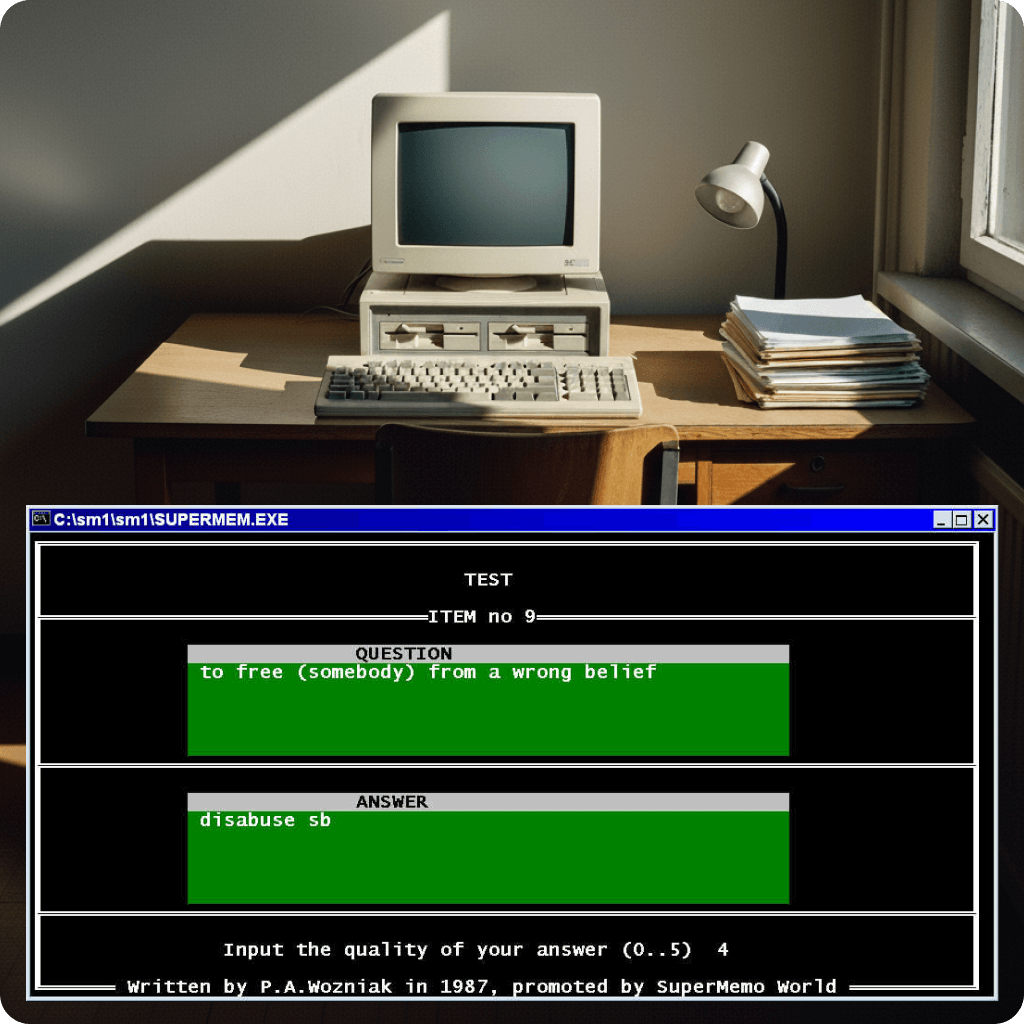
That same year, Woźniak began his IT studies at the Poznań University of Technology and bought his first computer, ZX Spectrum. He bought it second-hand from someone convinced that they are selling … “just a keyboard”. There is only one problem — the ZX Spectrum required the data to be uploaded on an audiotape. This limited the young scientist’s options but didn’t stop him from continuing his research. In 1987 his family decided to help financially, thanks to which Piotr Woźniak finally acquired a PC with a hard drive. In December, three months after the purchase, he launched the first SuperMemo application. It operated using a modified version of the SuperMemo algorithm (called SM-2), which assigned a specific level of difficulty to each piece of information and used this analysis to select the appropriate intervals between repetitions. The SM-2 is still an inspiration for many replay applications to this day — it is used, among others, by Anki, and formerly by Quizlet.

But Piotr Woźniak didn’t stop there — over the next few years, he kept creating new versions of the algorithm, improving its accuracy and fitting it to the material and the student’s predispositions. His many years of research on human memory became the basis of numerous master’s and doctoral theses, including his own. For the SuperMemo method, he received many awards and publications in prestigious magazines, such as Wired and The Guardian.

In this extraordinary story we also have to mention the year 1991, when Piotr Woźniak and his friend, Krzysztof Biedalak, started the SuperMemo World company, dedicated to the development and distribution of the SuperMemo application. Its mission? To provide each person with the possibility of effective, enjoyable learning and acquiring useful skills that will last.

That is why the SuperMemo method is the basis of our offer. Soon after that, the company focused on providing original language courses. 30 years later, we’re still trying to continue our mission — we are constantly working on the development of the method and our course offer.

Get to know the history of SuperMemo with all the spicy details! Check out the articles: “The true history of spaced repetition” (pol. prawdziwa historia inteligentnych powtórek), written by Piotr Woźniak himself, and „Who invented spaced repetition? The history of the SuperMemo method”, written by Krzysztof Biedalak.

SuperMemo - algorytm SM-20

SM-20 – the latest SuperMemo algorithm

The development of the SuperMemo method did not end with the creation of the first spaced repetition algorithms. The most advanced version of the algorithm developed by Dr Piotr Woźniak is SM-20, available through the SuperMemo API. SM-20 uses machine learning and artificial intelligence to create an optimal memory model and adapt it to each user’s individual characteristics.

From the very beginning, the development of the SuperMemo method has been based on research, and the results of work on repetition optimisation have also been presented in scientific publications. SM-20 is the next stage in this process, combining decades of knowledge about memory, mathematical models, learning data and modern machine learning methods.

SuperMemo API - algorytm SM-20

SuperMemo API

In 2026, the SuperMemo API debuted, giving external developers access to SuperMemo technology. This allows developers and companies to use the SM-20 algorithm in their own applications, educational platforms and other solutions in which long-term knowledge retention is important. The SuperMemo API makes it possible to implement advanced intelligent repetitions without having to build a proprietary algorithm from scratch. The engine can support, among other things:

  • learning applications,
  • educational platforms and online courses,
  • corporate training and knowledge retention systems,
  • assistants and AI-powered solutions.

SuperMemo method – FAQ

How does the SuperMemo method work?

The SuperMemo method is based on intelligent repetitions, which means reviewing material at individually calculated intervals. Instead of returning to every piece of information equally often, you review it exactly when it needs reinforcement. 

On each exercise card in the course, you assess how well you remember the information by choosing “I know”, “Almost” or “I don’t know”. The algorithm analyses your results and uses them to schedule the next repetition.

How does SuperMemo know when a particular piece of information should be repeated?

The algorithm analyses your learning history, the results of consecutive repetitions and the way you remember individual pieces of information. Based on this data, it predicts the probability that you will still remember the material and selects the appropriate time for the next repetition.

The aim is to schedule the repetition for the latest possible point in time, before the risk of forgetting becomes too high. As a result, information you remember well appears less and less frequently, allowing you to devote more time to material that genuinely requires further work.

Why can the SuperMemo method reduce the time needed for learning?

The effectiveness of an intelligent repetition algorithm depends primarily on how accurately it can predict the probability that a particular user still remembers a specific piece of information. The more accurate these predictions are, the better the timing of subsequent repetitions can be adapted to the user’s individual memory processes.

In practice, the quality of the algorithm affects both the amount of time spent learning and knowledge retention, meaning how much information remains in memory. Precise repetition scheduling can save even hundreds of hours of learning per year while maintaining a higher level of retention.

How is this possible? Firstly, the algorithm does not schedule repetitions of well-remembered information too early. Postponing these repetitions helps eliminate unnecessary work. Secondly, when a user still remembers a piece of information after a longer interval, repeating it at that later point can reinforce it more effectively and increase the stability of the memory trace.

In this way, SuperMemo helps reduce unnecessary repetitions and make better use of the time devoted to learning.

Is the SuperMemo method scientifically grounded?

Yes. The SuperMemo method was developed in the 1980s as a result of Piotr Woźniak’s experiments on memory, forgetting and optimal intervals between repetitions. SuperMemo pioneered the development of spaced repetition algorithms and has remained a leader in this field for many years.

Research into the method and its memory models continued over the following decades, and the results provided the basis for scientific publications and academic research. Successive generations of the algorithm were developed using new memory models, data analysis and observations of users’ real-life learning processes.

What is SM-20, and how does it differ from the SM-2 algorithm?

SM-2 is one of the earliest versions of the SuperMemo algorithm. It was developed in the 1980s and later made publicly available. Because of its simplicity and accessibility, it became an inspiration for many applications using spaced repetition.

However, SuperMemo did not stop developing its technology with SM-2. By the time this algorithm was published, we were already using much more advanced and effective algorithms, and new generations of them were developed over the following decades. SM-20 is the latest version of the SuperMemo algorithm.

Why does the quality of a spaced repetition scheduling algorithm matter? How can it be measured?

The quality of a repetition scheduling algorithm is reflected in how well it can predict the probability that a given user will remember a given piece of information at a specific point in time. This prediction is used to schedule subsequent repetitions, for example when the probability of recall falls to 90%. Therefore, an algorithm that performs poorly at such prediction is of low quality, and the more accurate the prediction, the higher the quality of the algorithm. When learning with a high-quality algorithm, you can be confident that you are using your learning time efficiently, i.e. not wasting it on unnecessary or overdue repetitions. You can also be confident about the learning outcomes—whether you are achieving the target level of recall, and thus the retention of the knowledge you are learning.

Is the SuperMemo method used exclusively for language learning?

No. The method can support the learning of many types of knowledge that can be presented as questions, answers, concepts or other items intended for memorisation. In addition to using ready-made language courses, SuperMemo users can also create their own courses and learning materials.

The SM-20 algorithm is also available to companies and developers through the SuperMemo API. This means that SuperMemo’s intelligent repetitions can be used in educational applications, vocabulary and flashcard tools, exam-preparation systems, corporate training programmes and AI-powered solutions.