Most people associate SuperMemo with language learning. Not everyone knows, however, that the company’s story began with research into human memory and one simple question: can we remember more while learning less? The answer led to the creation of the intelligent repetition method, which later inspired dozens of other educational projects around the world.
On July 5, 2026, SuperMemo World will celebrate 35 years of activity. It is a good moment to look back and recall the most interesting facts from the company’s history, its products, and the technology that has helped millions of people learn more effectively for decades.
1. It all started with one question
How can we make a person remember more while learning less?
This very question marked the beginning of SuperMemo’s story. In the mid-1980s, Piotr Woźniak began looking for a way to remember information more effectively during his own studies. Over time, this grew into years of research into memory and the creation of the world’s first intelligent repetition algorithm.
Although more than four decades have passed since then, the same question remains the foundation of SuperMemo’s development. Technologies change, new features and artificial intelligence appear, but the goal remains the same: to help people learn faster, more effectively, and for longer.
2. The algorithm is older than the company
Most people assume that the company came first and the technology came later. The history of SuperMemo was the opposite.
The first experiments with intelligent repetition scheduling began back in the 1980s, and the first algorithm was developed in 1985. Only a few years later, in 1991, SuperMemo World was founded and began developing courses and technologies based on this method.
It is quite an unusual story. Instead of creating a product and only then looking for a justification for it, the research and the algorithm came first, followed by the company that would continue developing them for the next 35 years.
3. The first intelligent repetition algorithm was created as early as 1985
Today, almost everyone interested in effective learning knows the concept of spaced repetition. In the mid-1980s, however, it was a completely new idea.
The first SuperMemo algorithm was developed in 1985. Its task was to determine the best moment for the next review of a specific piece of information. Not too early, because that would waste time. Not too late, because the material would already be forgotten.
This idea became the foundation of SuperMemo’s entire later history.
4. The company was founded in 1991
Although the algorithm already existed, SuperMemo World was established in Poznań only in 1991.
Since then, the company has developed not only the algorithm itself, but also language courses, educational apps, and further technologies supporting learning. Over 35 years, computers, the internet, smartphones, and artificial intelligence have changed, but the company’s main direction has remained the same.
5. SuperMemo is one of the longest-developed projects related to human memory
Most educational apps exist for a few or a dozen years. SuperMemo has been developed continuously for more than four decades, counting from the start of the research into the algorithm.
Such a long period made it possible to gather enormous knowledge about the process of remembering and about user behavior during learning. This is why successive versions of the algorithm could become increasingly precise.
6. The best-known SuperMemo algorithm… is no longer used in SuperMemo
This is one of the most surprising facts.
People interested in memorization techniques have most often heard of the SM-2 algorithm. It was the one published and made available to the world many years ago.
The paradox is that modern SuperMemo has not used it for a long time.
SM-2 was only one stage in the development of the entire technology. Since its publication, many later generations of the algorithm have been created, taking into account many more factors that affect memory.
7. Modern SuperMemo uses the SM-20 algorithm
The development of intelligent repetitions has never stopped. Each successive version of the algorithm used new observations about the process of remembering and an ever-growing amount of data.
Today, SuperMemo uses the SM-20 algorithm: the result of several decades of research and continuous improvement of the method. It is responsible for scheduling repetitions in current courses.
8. A whole branch of educational apps grew out of the SuperMemo algorithm
One of SuperMemo’s greatest influences on education is the fact that many popular programs use solutions derived from the SM-2 algorithm.
The best-known examples include Anki and Mnemosyne. They use the version of the algorithm that was publicly released years ago, while SuperMemo continued developing its own solution over the following decades.
It can therefore be said that modern apps using spaced repetition share common roots, but their further development followed completely different paths.
9. Intelligent repetitions do not mean learning the same thing every day
This is a common misunderstanding.
Many people think that the SuperMemo method consists of reviewing all flashcards every day. In reality, the opposite is true.
The system tries to show only the information that is just beginning to be forgotten. Well-consolidated material may return only after several months, or even years. As a result, study time is used much more effectively.
10. Every user has their own learning plan
Two people can start the same course on the same day and, after a few weeks, receive completely different sets of repetitions.
Why?
Because the algorithm does not follow one rigid calendar. It takes into account the pace of learning, the number of mistakes, and the individual memory capacity of a specific person.
In practice, this means that SuperMemo does not teach everyone in the same way. Instead, it tries to adapt the learning process to each user’s memory.
11. From the very beginning, SuperMemo focused on research-based learning
In the world of educational apps, a product is often created first, and only later is a justification for how it works sought.
The history of SuperMemo was different. First came memory research, then successive versions of the algorithm, and only on that basis were the program and courses developed.
This approach meant that for years the company was associated not only with language learning, but also with research into the effectiveness of learning.
12. From a computer program to an educational platform
The first versions of SuperMemo were programs running on personal computers. Today, the ecosystem includes mobile apps, an online platform, AI features, language courses, its own course editor, tools for creators, and solutions for companies.
The way we use technology has changed, but the goal has remained the same: to enable effective learning regardless of place or device.
13. Today, SuperMemo is much more than a language learning app
Although most users come to SuperMemo with English, Spanish, or German in mind, the platform has long gone beyond ready-made language courses.
You can create your own learning materials for practically any field: from biology and chemistry, through history, to medicine, law, or preparation for professional exams. Thanks to this, the same method that helps remember information also works when learning facts, dates, definitions, or formulas.
It is precisely the universality of intelligent repetitions that has made SuperMemo useful for school and university students as well as professionals preparing for certifications for many years.
14. In SuperMemo, you can add your own flashcards on any topic
One of the platform’s greatest strengths is the ability to create your own courses. The user is not limited to ready-made materials prepared by the publisher.
All you need is a simple list of questions and answers, or you can import your own flashcards. You can also enrich them with images, recordings, or additional comments.
This solution turns SuperMemo into a personal knowledge management system. One person will prepare an anatomy course, another will learn bird names, and a third will create a question base before a driving test.
15. Courses do not have to be learned in one imposed way
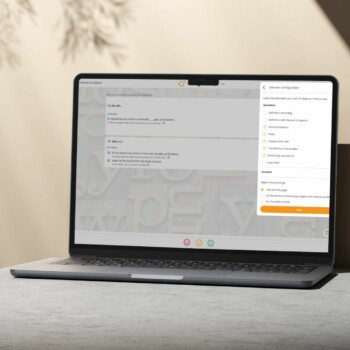
Most educational apps offer one fixed learning scenario. For years, SuperMemo has been developing the possibility of adapting courses to personal preferences.
The user, depending on the course series they are learning with, can decide, among other things:
- how many example sentences they want to see,
- whether recordings should play immediately,
- what information should appear on the screen,
- whether to learn by word popularity or by thematic categories.
As a result, two people using the same course can learn in completely different ways.
16. The offer includes 25 languages
For many years, the development of language courses has remained one of the pillars of SuperMemo’s activity.
Today, the offer includes exactly 25 languages: from the most popular ones, such as English, Spanish, German, or Italian, to less obvious choices, including Korean, Thai, Icelandic, Hebrew, and Arabic.
Importantly, many of them are available at different proficiency levels, from complete beginners to learners at C1 or C2 level.
17. Courses continue to develop even after release
In many publishing houses, publication means the end of work on the material. At SuperMemo, it is often the opposite.
After release, courses continue to be developed and improved. New recordings are added, translations are corrected, example sentences are expanded, and further configuration features are introduced.
Good examples are the PowerWords! and Extreme series, which underwent some of the biggest updates in their history over the past year. These included thousands of new recordings, graphics, improved translations, and the ability to customize how example sentences are displayed.
This means that even users who have owned a course for several years often receive new possibilities without having to buy a new version.
18. SuperMemo was one of the first Polish educational companies to use AI in practice
Even before artificial intelligence became an everyday topic of discussion, SuperMemo began working on using language models to support learning.
AI was meant to help the user when they needed an explanation of a mistake, an additional example, or a chance to practise a conversation.
This is how an entire family of tools based on artificial intelligence was born.
19. The AI Assistant appeared as early as 2023
The first major step in this direction was the release of the AI Assistant in mid-2023.
The feature helps explain mistakes made during learning, clarifies grammar issues, and answers questions about exercises. As a result, the user does not have to leave the course to look for answers in a search engine.
It is an example of a solution in which artificial intelligence acts as a teacher available exactly when needed.
20. MemoChat appeared at the end of 2023
Still in the same year, SuperMemo took another step forward.
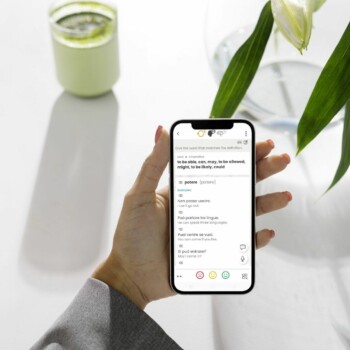
MemoChat allowed users to have conversations with AI in specific communication situations. Instead of answering single questions, you can start talking to a virtual conversation partner and practise the language in realistic scenarios. In addition, AI prepares sentence translations, corrects mistakes, and suggests answers when needed.
Today, the dialogues cover almost 100 topics: from ordering coffee, through a job interview, to a doctor’s appointment or planning a holiday.
As a result, learning is no longer only about memorizing words. It increasingly resembles real communication.
21. MemoTranslator was born from a simple idea: translation should lead to learning
Most translators finish their job the moment they display a translation.
MemoTranslator works differently.
Released in 2024, the feature allows users not only to translate texts and hold conversations in different languages, but also to instantly turn new words or entire sentences into flashcards for learning.
As a result, ordinary translation becomes the beginning of the memorization process.
22. In 2025, ChatBot joined the AI team
The next stage of development was ChatBot AI, launched in 2025.
It is not used directly for language learning. Its task is to help users choose the right course and answer the most frequently asked questions about the platform.
It is another example of using artificial intelligence where it genuinely makes users’ lives easier.
23. Live mode lets you talk to the course as if it were a teacher
One of the biggest recent innovations was Live mode, released in May 2026.
Unlike classic exercises, the user no longer has to click through buttons or read questions from the screen. The course speaks to them aloud, and answers are also given by voice. The conversation flows smoothly and resembles contact with a real teacher.
This solution shows how much language learning has changed over the past three decades: from simple flashcards displayed on a monitor to natural conversations supported by artificial intelligence.
24. In SuperMemo, you can also learn without internet access
Just a few years ago, language learning was associated mainly with internet access. Today, more and more people consciously look for ways to reduce notifications and distractions. That is why the SuperMemo mobile app allows users to download courses to their device and learn offline.
This solution is useful not only when travelling by plane or train. More and more users also use it during everyday study sessions, consciously cutting themselves off from the internet and social media.
25. Your own courses can be created in a few minutes
SuperMemo allows bulk flashcard creation by simply pasting a properly prepared list. What is more, more and more people use language models such as ChatGPT to prepare learning material and then import it into their own course.
This makes it possible to create, in just a few minutes, a set covering vocabulary, biology definitions, historical dates, exam questions, or the most important concepts from any field.
26. SuperMemo helps you learn more than just languages
Although the company is associated mainly with language courses, the intelligent repetition method can be used wherever a large amount of information needs to be remembered.
Private courses are used by medical students, future lawyers, programmers preparing for certification, high school students, and even enthusiasts of history, astronomy, or botany.
This shows that effective learning does not depend on the topic. What matters most is proper planning of the memorization process.
27. Not every flashcard is good – for years, SuperMemo has promoted the principles of creating them correctly
One of the lesser-known elements of SuperMemo’s history is its enormous influence on popularizing the principles of designing effective flashcards.
The article Twenty Rules of Formulating Knowledge, written by Piotr Woźniak, has for years been one of the most frequently cited texts on effective learning. Many principles used today by course creators and users of apps based on intelligent repetitions come from it.
One of the most important rules says that a good flashcard should contain only one piece of information. The simpler the question, the easier it is for the brain to consolidate the answer.
28. Learning does not end when the course is completed
In many apps, finishing a course means the end of learning. In SuperMemo, it is different.
After the whole material has been completed, the algorithm still makes sure that the knowledge is not forgotten. Previously scheduled repetitions appear when they are most needed, so the user maintains acquired skills for the following months, and even years.
This is one of the greatest advantages of the intelligent repetition method. The goal is not merely to complete the course, but to remember the material permanently. In practice, this means that learning does not end with the last lesson: it only changes its character. Instead of discovering new content, the user regularly refreshes what they have already mastered, preventing it from disappearing from memory.
29. Many improvements and options were created thanks to user feedback
Although scientific research and the team’s experience stand behind SuperMemo’s development, users themselves also have a huge influence on the direction of the platform.
Their suggestions have contributed to the creation of many new features, settings, and improvements introduced over the years.
SuperMemo develops not only thanks to new technologies, but also thanks to everyday conversations with users. Reported comments, ideas, or proposals can become inspiration for further changes later used by thousands of people around the world. This makes the platform not a closed product, but a solution that constantly evolves together with its community.
30. Behind every course stands the work of many specialists
Preparing a modern language course is not just about translating a list of words.
Content authors, voice talents, programmers, and graphic designers all work on the materials, among others. Only combining their experience makes it possible to create a course that is linguistically correct, attractive, and convenient to use at the same time.
This is often the invisible part of the work without which no modern educational platform could function.
31. SuperMemo has won international awards
The company’s history is not only the development of technology, but also international recognition, awards and distinctions.
One of the best-known examples is the Olive Green course, which won prestigious industry awards for its innovative approach to learning English. The project showed that combining a good storyline, film, and the SuperMemo method can create a completely new quality in education.
This confirms that solutions developed in Poland can compete with the best educational projects in the world.
32. SuperMemo is also developing its own API
Not all users know that the experience gained over the years was also used to create the SuperMemo API.
It allows programmers and companies to build their own educational solutions using the SuperMemo intelligent repetition method and the latest version of the SM-20 algorithm.
It is a step toward a future in which effective learning can be integrated with many external apps and platforms.
33. The biggest change of recent years is not AI
In reality, the biggest change is something else: the shift from passive knowledge acquisition to active communication. Today’s user does not only memorize words. They talk, translate texts, create their own materials, speak aloud without using a keyboard, and learn in natural situations.
AI has become a tool that accelerates this process, but its foundation remains well-planned learning.
34. 35 years later, the mission remains the same
Over three and a half decades, almost everything has changed.
Desktop computers have been replaced by smartphones. CDs have given way to the cloud. Classic computer programs have turned into online platforms. Artificial intelligence has entered everyday life.
One thing, however, has remained unchanged.
From the beginning, SuperMemo’s mission has been to help people learn more effectively and remember more with less time invested.
35. The most interesting SuperMemo story… is probably only just beginning
Looking at recent years, it is hard not to notice the pace of change. AI Assistant, MemoChat, MemoTranslator, ChatBot AI, and Live mode appeared within just a few years.
At the same time, the history of SuperMemo shows that the greatest innovations are not born from temporary trends. They arise from consistently developing one idea over decades. That is why a company that began with memory research in the 1980s still sets directions for the development of modern education.
35 years have passed. The next chapters are ahead.
The story of SuperMemo is a story of innovation, research, and continuous improvement. It does not contain one single breakthrough moment or one technology that changed everything. Instead, it contains many small steps: from the first intelligent repetition algorithm, through the development of language courses, to the use of artificial intelligence for natural conversations.
After 35 years, one thing can be said: the world of education has changed beyond recognition, but SuperMemo’s goal has remained the same. To help people learn more effectively, more intelligently, and with greater satisfaction. If recent years are a preview of what awaits us in the future, the most interesting chapters of this story may still be waiting to be written.