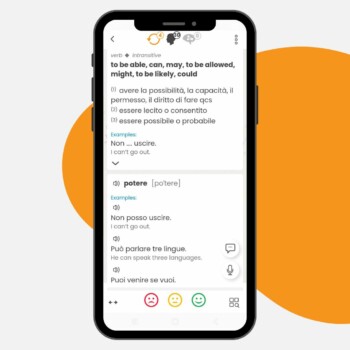
PowerWords! is a SuperMemo course series for people who want to effectively expand their vocabulary in a foreign language. Now the courses in this series are even more convenient: we have updated the translations of headwords and example sentences, added recordings for all examples, and introduced expanded options for configuring your learning.
The most important change concerns the quality of the material. In 18 PowerWords! courses, we have improved and completed the translations of headwords and example sentences in all interface languages, that is, in the language in which you use SuperMemo. This means thousands of translations in each course. They make it easier to understand the meaning of new words, see how they are used in natural context, and move faster from recognizing vocabulary to using it actively.
(English subtitles available)
What are PowerWords courses?
PowerWords! are vocabulary courses created for people who want to systematically build their word stock and practise pronunciation. Each course focuses on lexis, but it does not stop at a simple “word – translation” model. The courses also include usage examples, definitions, information about meaning, parts of speech, and elements that help you better understand the context.
This is especially important when learning a language at intermediate and advanced levels. A single word often has several meanings, changes its sense depending on the construction, or combines with other words in ways that are not visible from the translation alone. PowerWords! helps you notice these relationships because it shows vocabulary in use.
The courses are suitable both for self-study and as a supplement to other materials: a textbook, lessons with a teacher, a general language course, or exam preparation. You can use them intensively to quickly expand your vocabulary, or add them calmly to your daily review routine.
What’s new in PowerWords?
The biggest change is the improved and completed translations of headwords and example sentences in all 18 courses, for every interface language. We used the latest technologies to improve the learning experience for people who already have a course from this series, as well as for those who are just deciding to start one.
A good translation in a question is a huge support. It lets you quickly grasp the meaning before you move on to a broader context. This is especially helpful at lower proficiency levels, when definitions can be difficult, too abstract, or require knowledge of more unfamiliar words.
In PowerWords!, you can now make even better use of translations, examples, and recordings. This makes learning more flexible. Someone who is just getting to know basic vocabulary works differently from someone who wants to organize their knowledge of multiple meanings, and differently again from a user preparing for fluent communication. The refreshed courses let you adjust this process to your own goal.
Better translations of headwords and example sentences
A translation in a vocabulary course should not be a random hint. It should help you understand the meaning of a word in a specific use. That is why, in PowerWords!, we have improved and completed thousands of translations not only of the headwords themselves, but also of the example sentences.
This is an important difference. The headword shows the basic meaning. The example shows how the word behaves in a sentence: which words it combines with, in what situation it sounds natural, and whether it has a neutral, formal, informal, or specialist character.
When you learn a word without context, you may recognize it, but still not know when to use it. When you see it in a sentence and have a good translation as well, you build language intuition faster. You begin to notice patterns. Later, these patterns help you speak and write more naturally.
Recordings for all examples
The second important new feature is recordings for all examples. In vocabulary courses, audio matters enormously because language does not exist only in text. You need to hear it, recognize it, and associate it with the rhythm of a sentence.
Recordings help you get used to pronunciation, intonation, and natural pace. They also make memorization easier because they engage another cognitive channel. You do not just see the word. You hear it in a sentence. You can repeat the example, come back to it, and gradually reinforce whole structures.
This is a good solution for people who want to improve their listening comprehension. Short examples are easier to process than long recordings, while still giving you contact with living language. Over time, users will begin to recognize words faster and will be able to repeat aloud not only individual words, but also whole phrases.
More course configuration options
The refreshed PowerWords! courses give you more control over how you learn. You can adjust the elements displayed in the question and answer, and use recordings in a way that matches your own preferences.
This is especially useful when you want to learn more consciously. At the beginning, you can focus on the translation to quickly understand the meaning of new headwords. Later, you can shift more attention to examples, definitions, or recordings. As a result, the same course can support different stages of learning.
One practical option is the automatic playback of the example recording after the answer is displayed. This mechanism helps turn a regular review into a short contact with the language. Instead of only checking whether you remember the meaning, you hear the word in a natural sentence and strengthen the association between form, sound, and meaning.
Which languages does the PowerWords series cover?
The PowerWords! series includes vocabulary courses for many languages, including both popular languages and those chosen less often by online learners. The offer includes courses for languages such as Japanese, Greek, Thai, Chinese, Czech, Swedish, Italian, Danish, Turkish, and Korean, among others. Other languages from the SuperMemo catalogue are also available.
This is a major advantage because vocabulary learning looks different depending on the language. In European languages, major challenges often include collocations, prepositions, articles, or the many meanings of a single word. In languages that are more distant from Polish, learners also face a new writing system, pronunciation, word order, or a completely different way of building meaning. PowerWords! helps you organize this information step by step.
Who are PowerWords courses for?
PowerWords! are a good choice for people who want to expand their vocabulary, practise pronunciation, and consolidate new words in long-term memory. They work well at different stages of learning because vocabulary can be reviewed gradually and returned to whenever needed.
These courses do not require long sessions, but they work best when they become part of your daily routine. A dozen or so minutes a day may be enough to systematically learn new words and reinforce previously studied material.
PowerWords! will also benefit people who already have contact with the language but feel they lack words. This is a common problem: you understand grammar rules, you can build a sentence, but in conversation you are missing a specific noun, verb, or adjective. Working with vocabulary in context helps reduce this barrier.
Why learn vocabulary in context?
Vocabulary is the foundation of communication. Without it, it is difficult to understand texts, build sentences, and respond in conversation. Simply memorizing a list of words is usually not enough, because language works through combinations. You need to know not only what a given word means, but also how to use it.
Context shows what cannot be seen in isolation. It teaches typical combinations, word order, secondary meanings, and situations in which a given word sounds natural. That is why example sentences are such an important element of PowerWords!. They help you move from passive recognition of a word to active use.
Better translations of examples strengthen this effect even further. Users do not have to guess the meaning of the whole sentence. They can compare the foreign-language version with the translation, notice the differences, and remember ready-made structures. This is a simple way to develop language intuition.
How to make the best use of the new PowerWords
It is best to start with your goal. If you want to expand your vocabulary quickly, learn regularly and use translations and examples. If pronunciation and listening comprehension are important to you, turn on the example recordings. If you are at a lower level, you can rely more strongly on translations. At a higher level, it is worth gradually increasing the role of definitions and sentences in the foreign language.
It is also a good idea to listen to examples after the answer is displayed. This is a short but valuable contact with the language. One review then gives you several pieces of information at once: meaning, spelling, pronunciation, and use in a sentence.
It is also worth returning to the course settings. What helps at the beginning will not always be the best option after a few weeks. When the material becomes easier, you can reduce the number of hints and increase the level of difficulty. This way, PowerWords! remains useful not only at the start, but also later in your learning.
Why is this update important?
The PowerWords! update strengthens what matters most in vocabulary courses: meaning, context, sound, and learning flexibility. Improved translations help you understand the material better. Example recordings support listening practice. Configuration options let you adjust the course to your level and goal.
This is not just a cosmetic change. The refreshed courses better respond to the real needs of language learners: I want to understand more, remember for longer, speak more naturally, and not waste time on material presented in an inconvenient form.
If you already use PowerWords!, it is worth returning to the course and checking the new options. If you are just looking for a vocabulary course, this is a good moment to start with a series that combines translations, examples, recordings, and intelligent reviews.
Summary
PowerWords! are courses for people who want to learn vocabulary in a foreign language effectively. After the update, they offer better translations of headwords and example sentences, recordings for all examples, and more configuration options.
As a result, learning becomes more natural, convenient, and tailored to the user. You can work with translations, listen to examples, analyze context, and use the SuperMemo method, which supports longer-lasting memorization.